
Gemstones, Ghosts & the Garden of Earthly Delights

Updated: May 8
On the winding, luminous path of painter Alessandro Keegan
by Hope Christofferson
Some people find their way to painting through a single blinding revelation — a vision, a teacher, a thunderclap of purpose. Alessandro found his way through gemology. Which is to say: through a dark laboratory on 47th Street in Manhattan, a microscope, and eight hours a day spent staring into the hearts of diamonds. The paintings came anyway. They always do.
In the interview Alessandro speaks on gemology, Hieronymus Bosch's secret society, and a voice that sometimes speaks mid-canvas and changes everything.
The Cabinet-of-Curiosities Child
Alessandro did not begin as an artist — or rather, he did not begin by knowing he was one. As a child, he wanted to be a scientist, but not the spreadsheet kind. The 18th-century Wunderkammer kind. The kind who wanders around being astonished by things. The variety of the natural world, the strangeness of existence, the fact that anything is here at all — these were his early obsessions.
Then came the experiences that tilted everything sideways. Psychedelic ones, as a teenager, and others that were not chemically induced at all — visions, encounters with something unnamed that he has never quite pinned down as psychological or mystical, and has largely stopped trying to. "Even if it was just chemistry," he says, "what a miracle. Carbon aligning to create acids that form DNA, and somehow we have out-of-body experiences. That's still bizarre. That's still confounding."
The sciences, as formally practiced, did not hold him. Life had other plans. He moved through state college and then the Art Institute of Chicago, and by his early twenties was already making paintings that were bodily, biological — things that looked like microscopic worlds and human forms simultaneously. The building blocks were all there. He just didn't know yet what he was building.


The Dark Laboratory
The late 2000s art market was not kind to painters. An aunt who worked at the Gemological Institute of America on 47th Street mentioned they were hiring, and that they would pay for the certification. Alessandro was broke, in debt from art school, and so: yes. Gemology.
For about three years he worked in a dark laboratory grading diamonds and gemstones under a microscope — eight hours a day, sometimes overtime. Very Snow White and the Seven Dwarves. Little figures hunched over stones in the dark.
But something happened in that darkness. Alongside the grading work, Alessandro maintained a meditative practice. And he began to notice a connection between the physical properties of the stones he was studying and something he was trying to understand about invisible energy moving through the world.

A diamond doesn't split light. Light passes through it completely unfazed, untransformed. A cubic zirconia — a convincing imitation — fragments the light, disrupts it. Alessandro found himself thinking: some people are like that.Some people, light just flows through them. Others — artists, sensitives, people who have attuned themselves a particular way — transmute it. Split it into specific wavelengths. Filter it through whatever glass prism the mind happens to be.
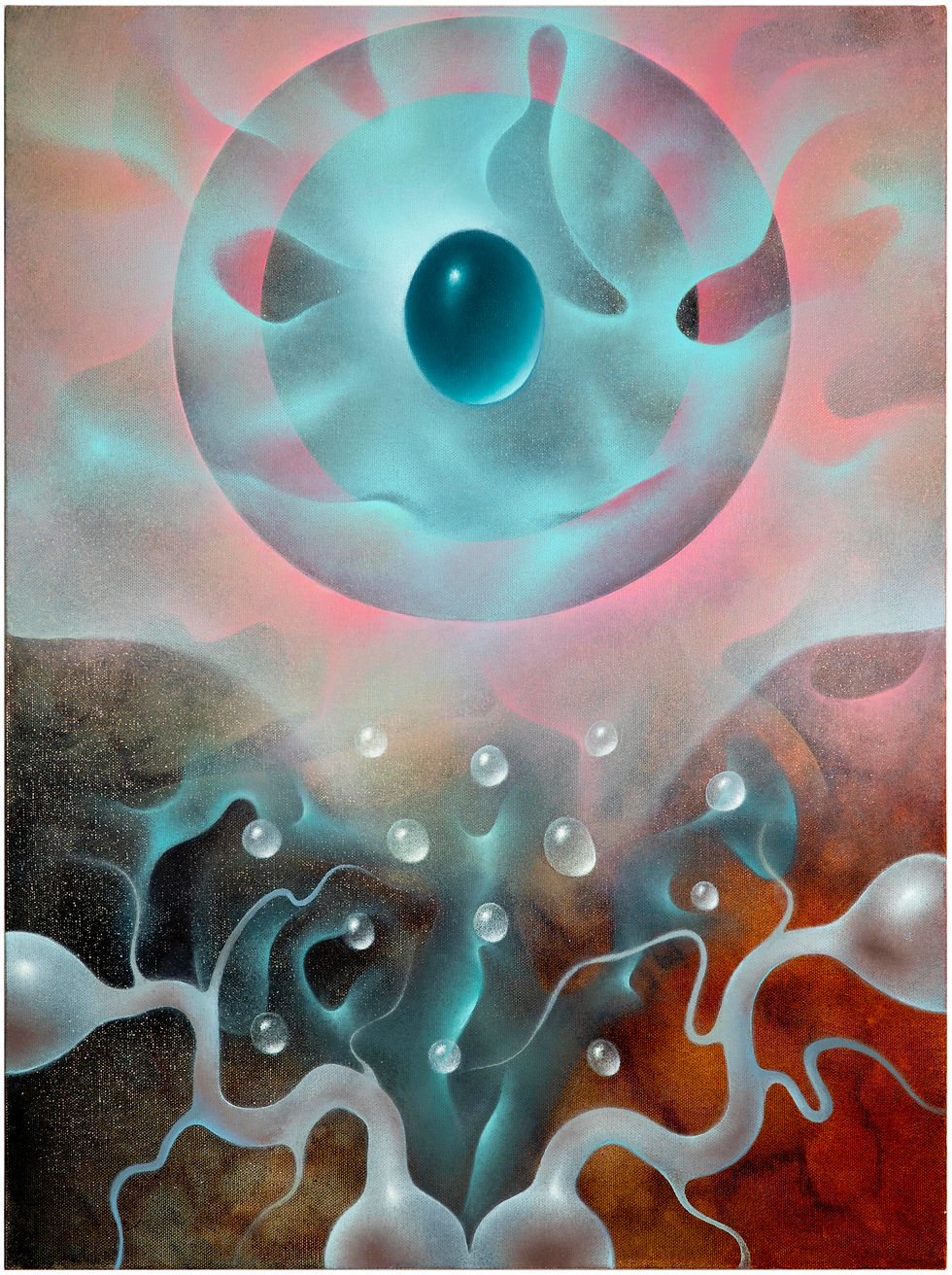
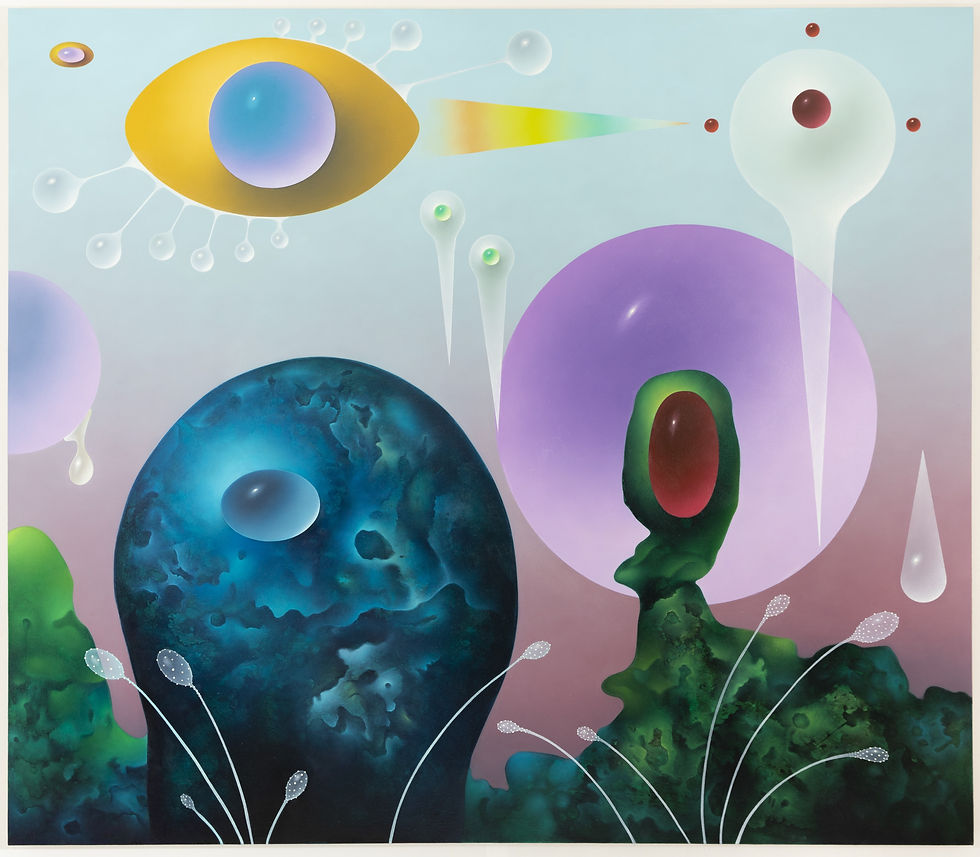
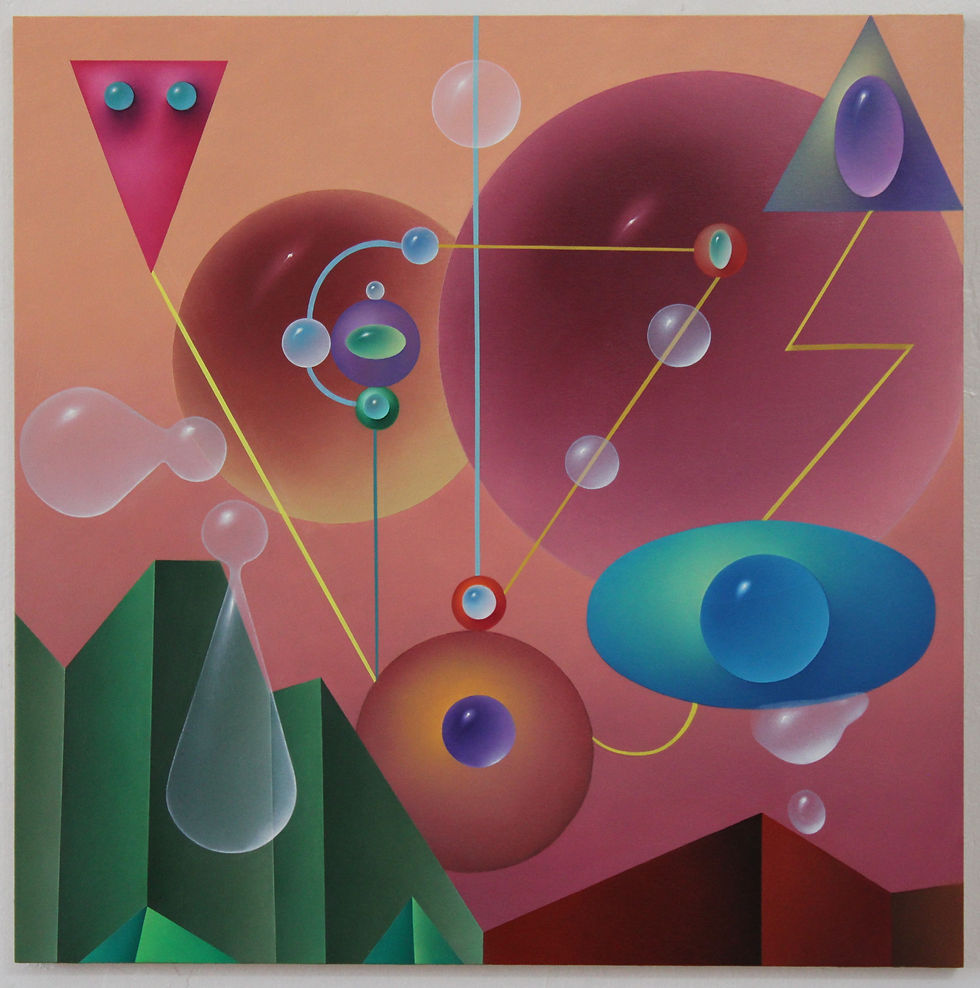
That became the central metaphor of his entire practice. The orb, the crystalline form that recurs throughout his paintings — it is a stand-in for the experience of invisible energy moving through the physical world. The idea arrived in a dark laboratory on 47th Street, under a microscope, in the diamond district of New York.
The Orbs Arrive
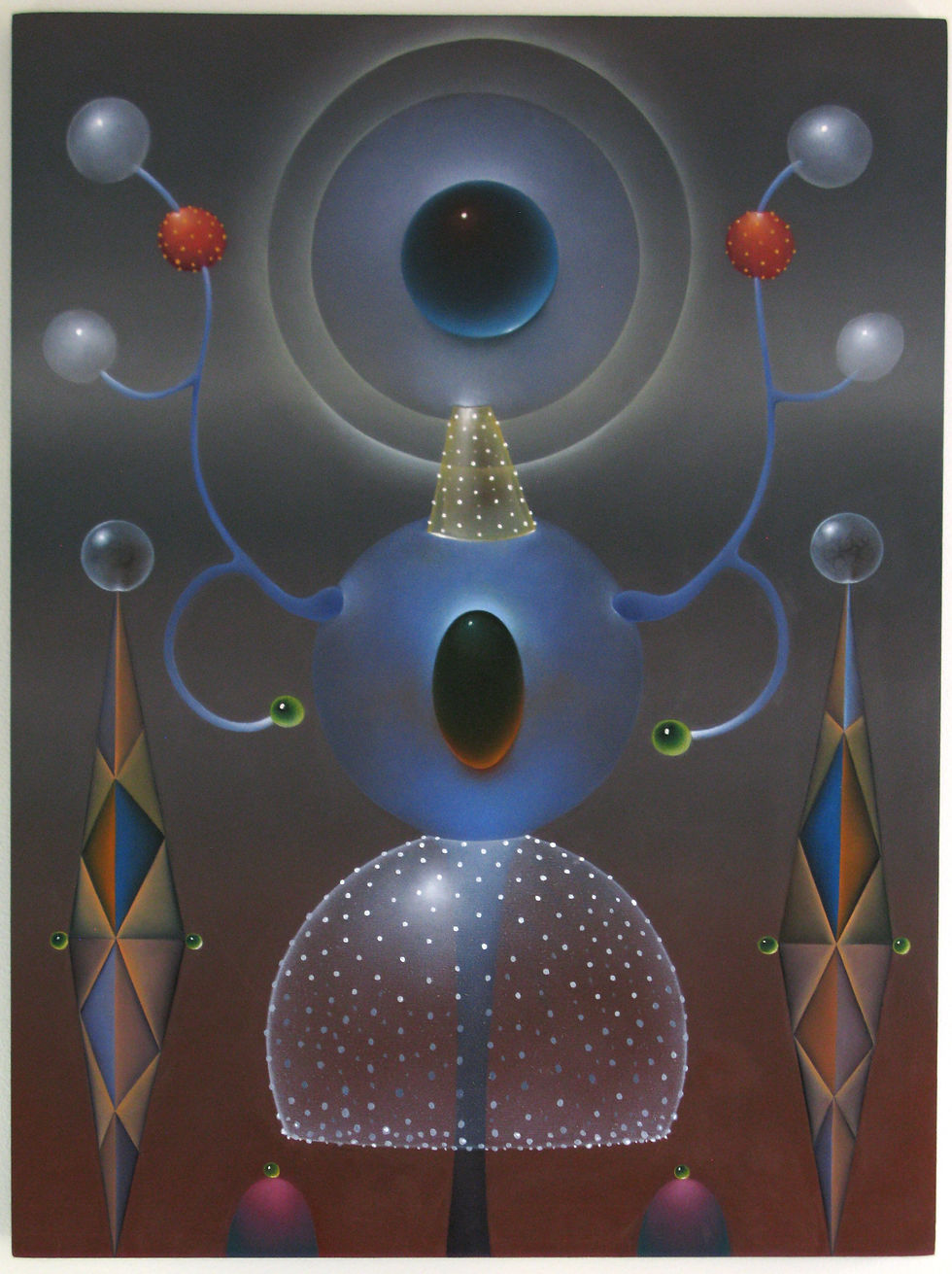
Toward the end of his time at GIA, Alessandro began embedding actual gemstones — Cabochon-cut stones, smooth and rounded, the kind you find in medieval reliquaries before the modern faceted diamond existed — into the wooden panels he was painting. It felt a little gimmicky, he admits. But something was trying to take shape.
The fully formed orbs that his work is now known for didn't arrive until around 2015. In the years between, he left GIA, completed a master's degree in art history at Brooklyn College, and wrote a thesis on spirit photography in the 19th century — on a photographer named William Mumler who claimed to capture ghosts on film. At the time, the connection between modernism and occultism was not widely written about, and it felt like a gap he could walk through. Referencing Kandinsky , Georgiana Houghton, and the history of Tantric painting, Alessandro connects the past to the present via the lens of spiritual painting. The world, he notes with some satisfaction, has since caught up.
He has been teaching art history at City University of New York for about eleven years now. Survey classes, mostly — students who have never seen a Caravaggio in their lives.
"I get to show them for the first time," he says. "That never gets old."
On Bosch
Ask Alessandro about Hieronymus Bosch and something shifts in him. Bosch is his favorite painter, possibly of all time. That man, he says, saw the future. Bosch was also influenced by the institutions of his time. He was a sworn member of the Illustrious Brotherhood of Our Blessed Lady (also known as the Swan Brotherhood), a religious confraternity founded in 1318 in Hertogenbosch, Netherlands. The Brotherhood was made in veneration of Mary and commissioned numerous pieces from Bosch- thus providing him with a social and monetary structure.

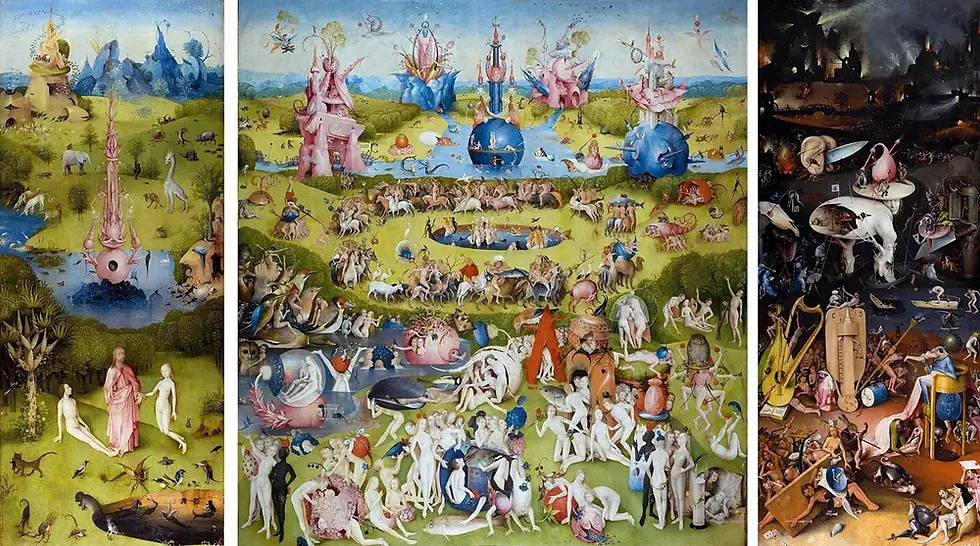
What makes Bosch endure — what no artist who directly imitates him ever quite replicates — is that there is no clear message you can absolutely decipher. The work moves back and forth between unsettling and beautiful without ever quite landing. The central panel of the Garden of Earthly Delights, the great party panel, does not read to Alessandro as a moral warning against pleasure.
It reads as: this is the world. It is impossible and it exists anyway.
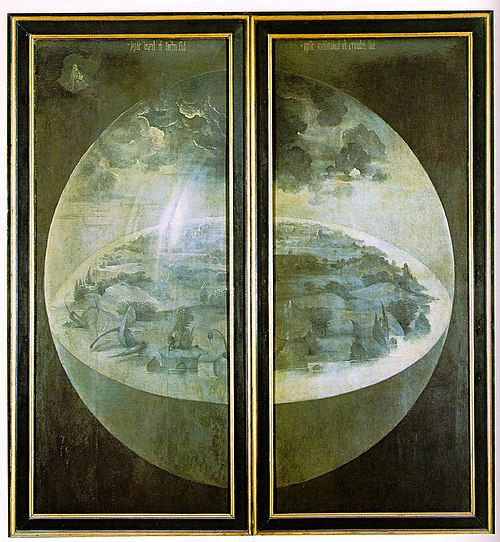
The closed exterior panels of the Garden show the Earth as a crystal ball — a sphere suspended in grey void. Alessandro sees in those panels an echo of the show globes that alchemists used: glass chambers where they would perform chemical reactions almost theatrically, as a kind of scientific performance.
God in the clouds, off to the side, like an alchemist conducting an experiment inside a crystalline vessel. Even that interpretation, he admits, feels like reducing something irreducible. Bosch is just more strange than any explanation can hold.

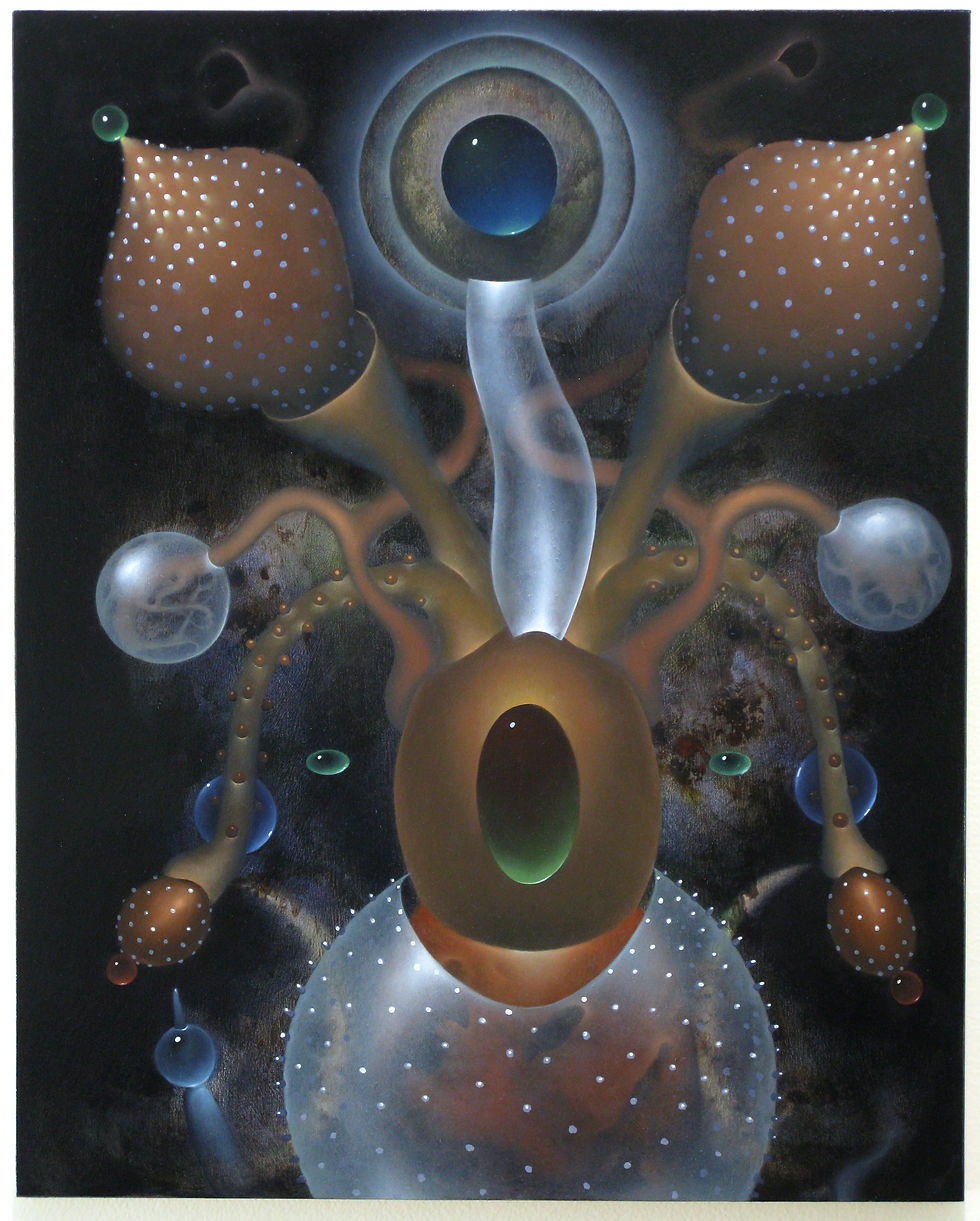
The hybrid fountain-vessels in the Garden — the forms that look like bodies merging with mineral structures merging with machinery — have found their way into Alessandro's own paintings. There is a timeless quality to the oval forms and smooth varnishes in both these artist's work. A timeless beauty that defies the categorization of the art historian's cabinet of curiosities.
The Apollonian and the Chthonic

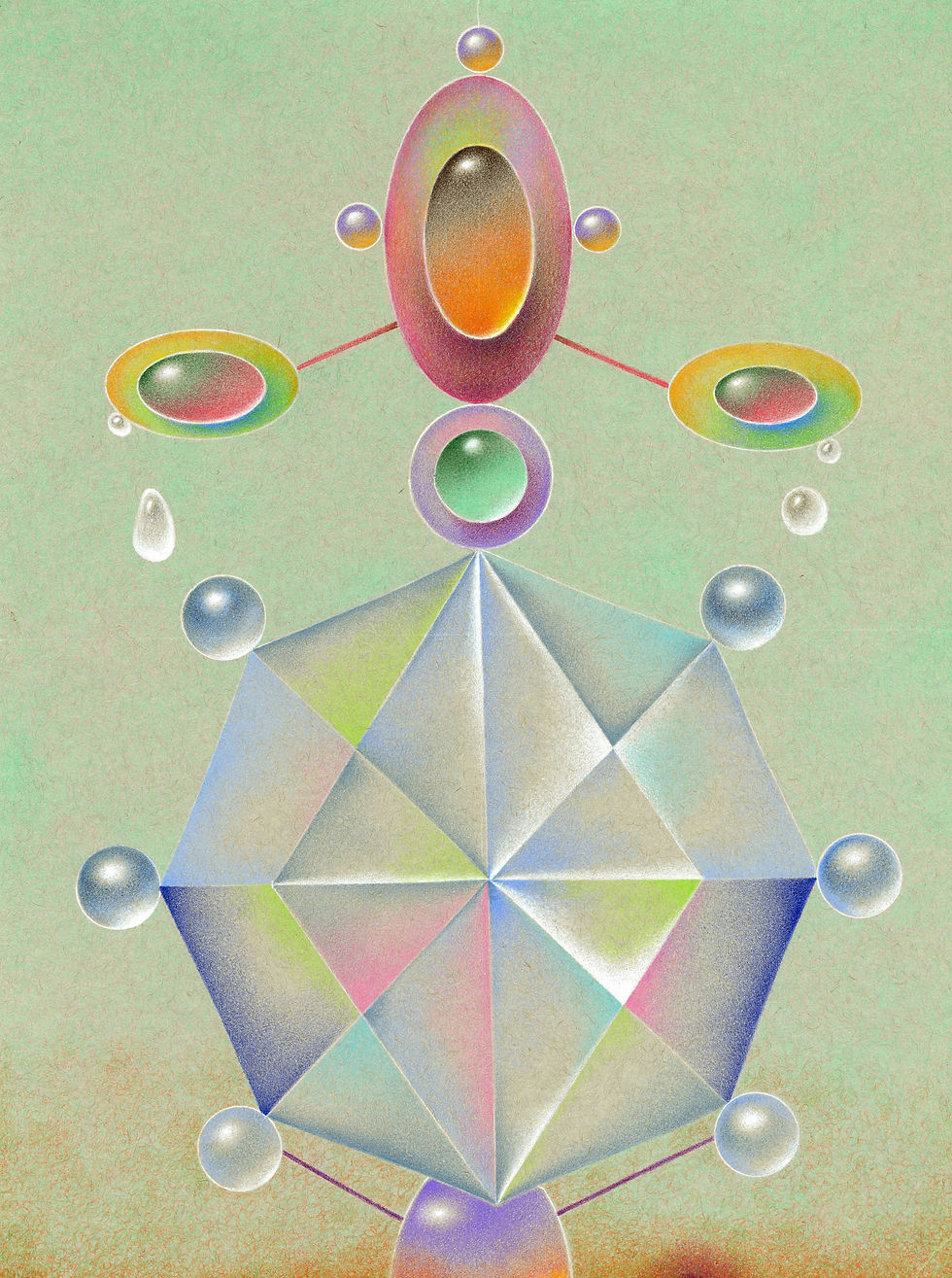
Alessandro describes his paintings as oscillating between two poles. The Apollonian: hard-edged, structured, almost mechanical, fully formed. The Chthonic: rhizomatic, spreading without boundaries, like the ocean — dark and deep and without hard edges. The last three years have leaned toward chaos, toward taking his hand off the canvas and letting forms generate themselves through texture and mixed media. Now he feels the pull back toward solidified color, toward the hard edge again.
"It comes in cycles," he says. "It's very musical — the harmony and disharmony of it."

The Ritual, and the Voice
Before dawn, Alessandro blacks out the curtains completely. Candles. Incense — scent matters. He makes offerings at a shrine he declines to describe in detail, because there is an old principle in magical working: you don't announce what you're doing, or it loses its charge. About twenty minutes of this, and something comes through. Sometimes it is powerful. Sometimes it is just a nice morning routine and then coffee.
In the studio itself, no ritual is needed. A voice — or a force, or whatever it is — can arrive at any time. It can intrude mid-painting and completely change the direction of the work. It is not Alessandro's inner monologue, though he has one of those too. It is something else: abstract, mostly visual symbols, occasionally an actual sound. Androgynous. Sometimes more feminine. Very difficult to describe to someone who has not experienced it.
The last time it came clearly, it sent him a diagram: circles, channels between circles. He is still interpreting what it was trying to tell him.
If He Could Time Travel
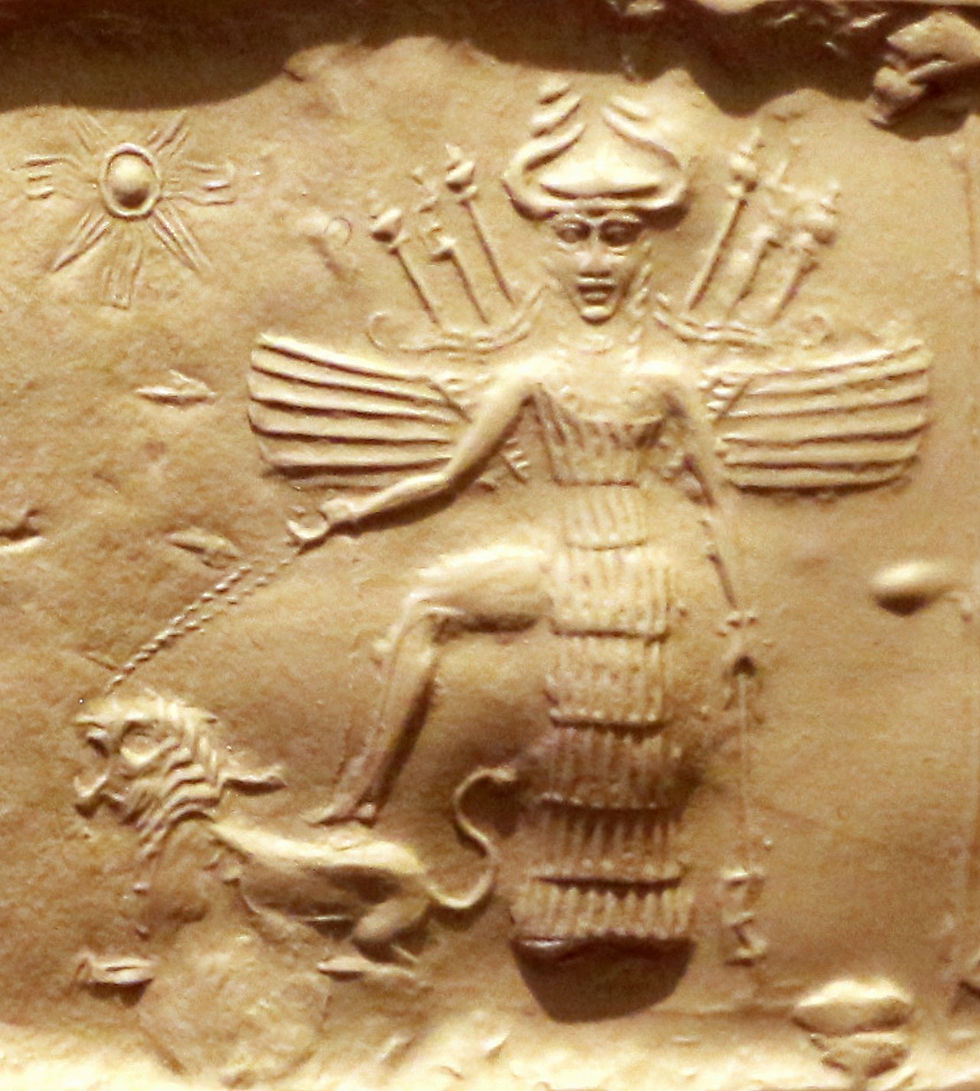
When asked where he would go if he could travel invisibly through history, Alessandro's first instinct is Berlin in the 1980s, to see the Birthday Party and Malaria play live in the clubs. But if he is being serious: ancient Sumer. The temples of Inanna. Something about what happened in those ziggurats — the rituals, the cosmology — he would want to witness early humanity. And whatever he saw, he suspects, would end up in the paintings. The way everything always does.
"I let everything inspire me."
-Alessandro

On the Winding Path
Alessandro did not begin making the paintings that got him attention until he was well into his thirties. He explored the world as a gemologist, art historian, and teacher. The building blocks for his current body of work were always present — even in high school, if you look at those early drawings, you can see what was coming. But it took a long time to arrive at the thing.
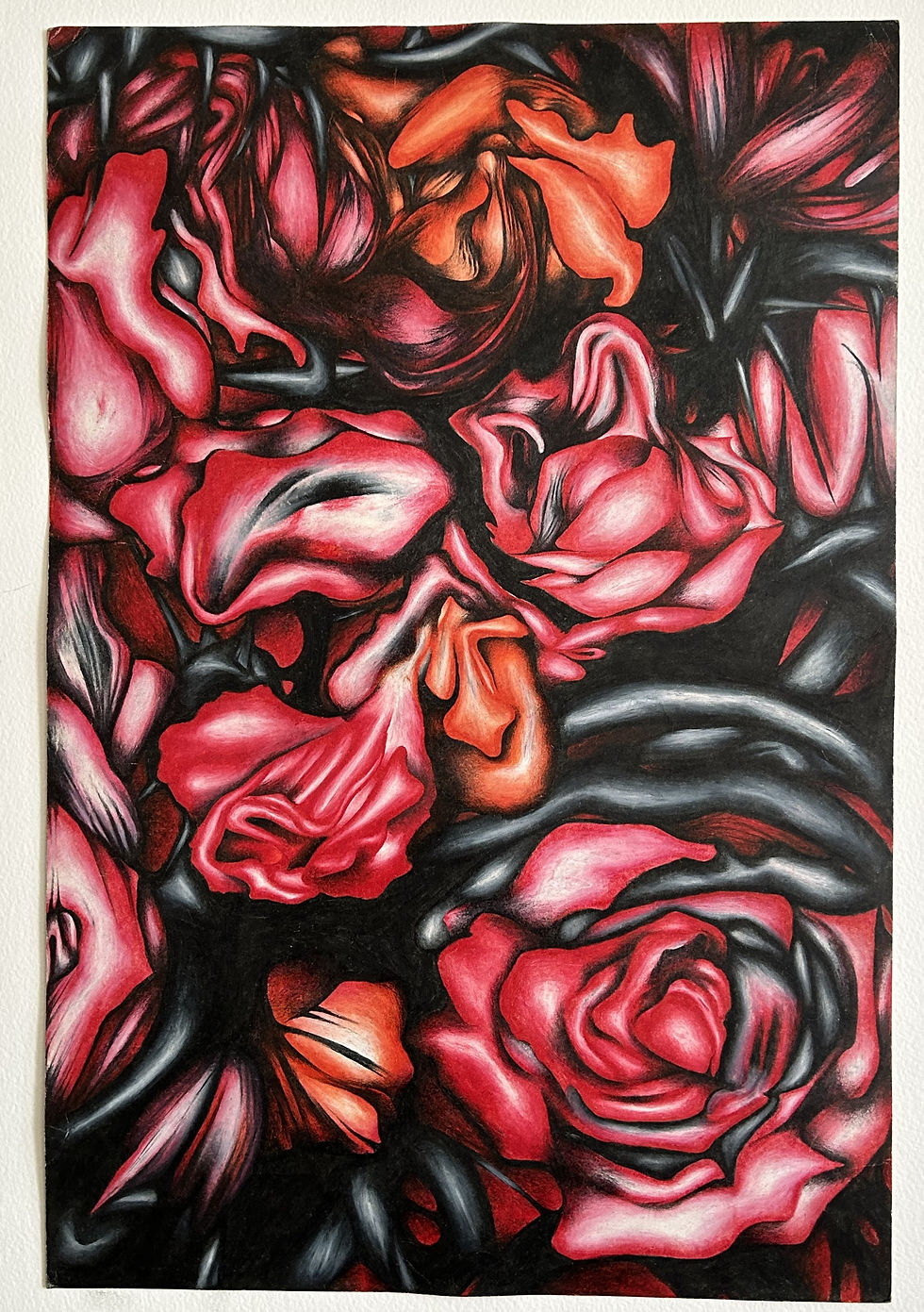
This is the true alchemy of the artist's journey- open mindedness, curiosity, and passion. Alessandro certianly embodies all of these qualities. His works break the bound of the imagined and grow into unexplored realms of form, color, and light. Artifacts of a fantastic future blooming beyond tomorrow's garden gate.
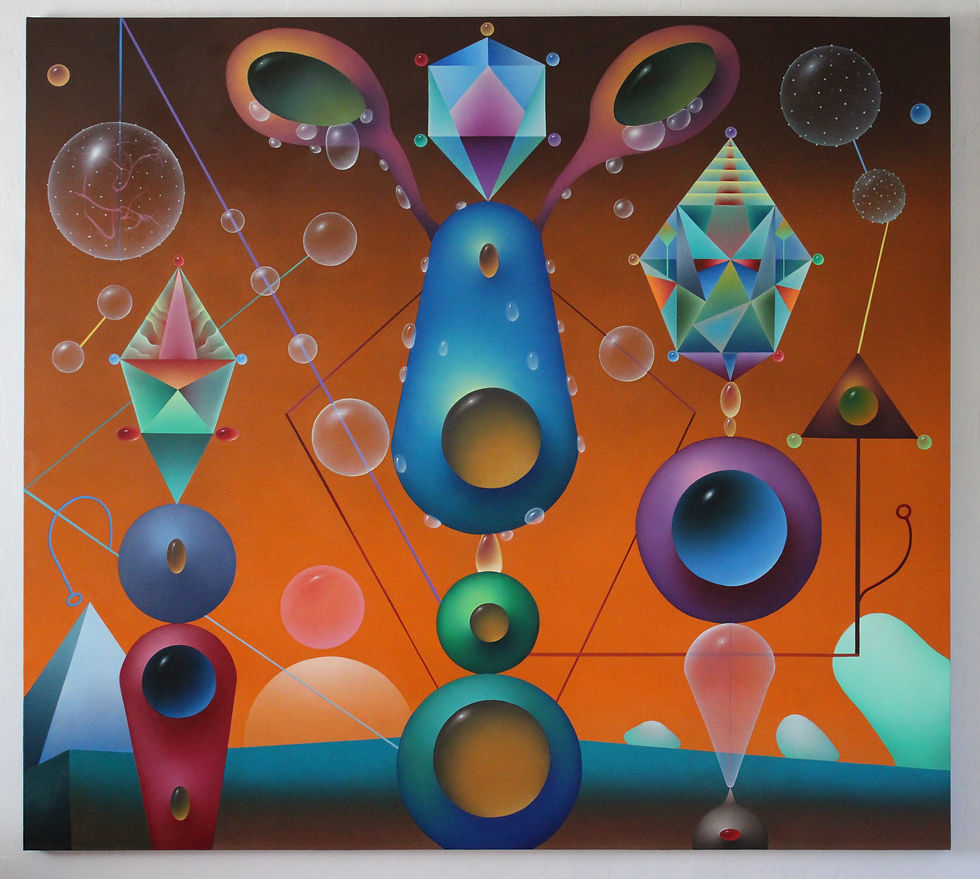
Alessandro's paintings are made to be seen in person. Until then, the internet will have to do — and even flattened into a screen, they stop you. Go look.
— H.C., Loreland
This interview is also available as a
Please check it out and leave us a review!
The lovely music for this episode was made by Peitkze, who's music transcends the ordinary!


Comments